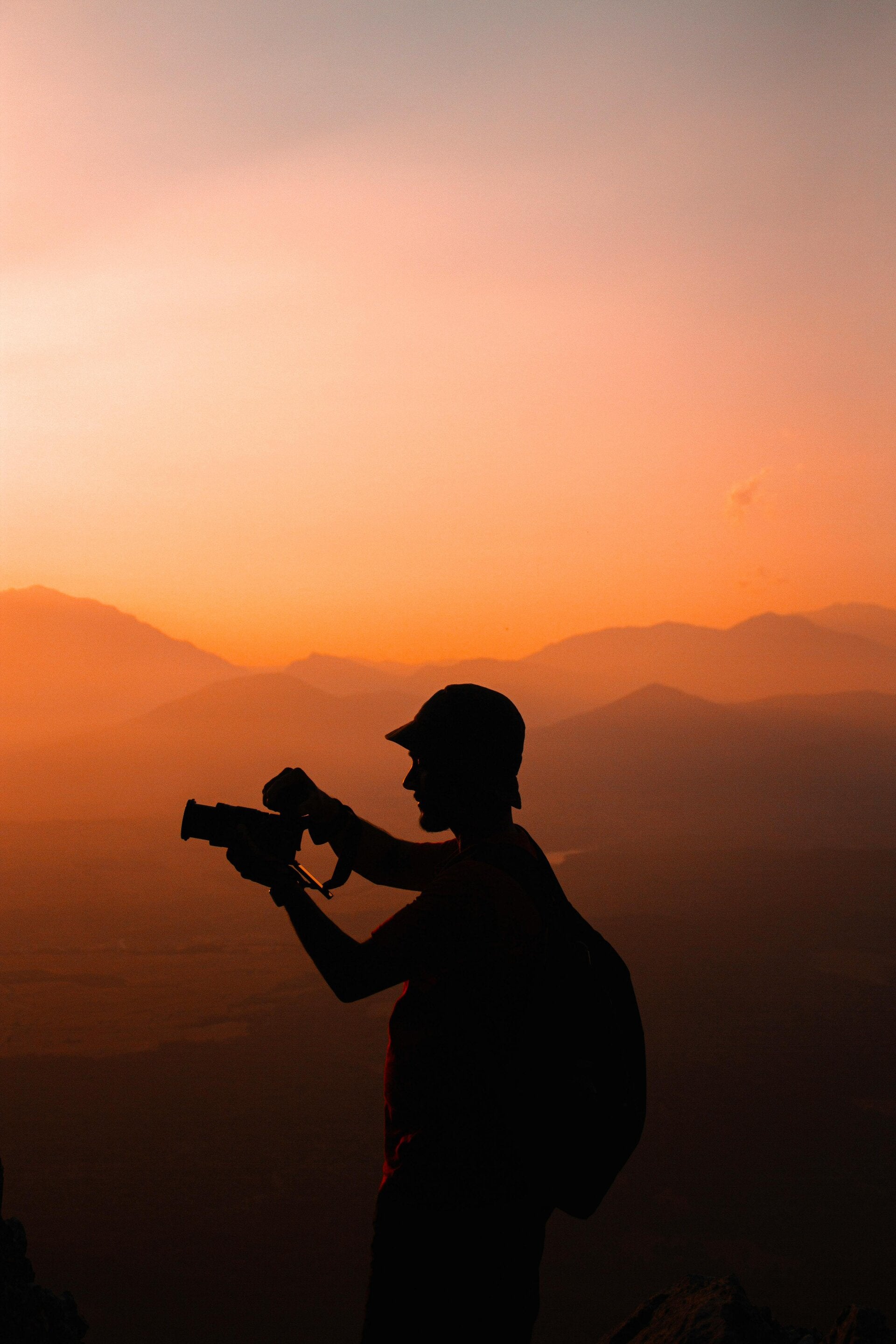
The New Reality of Fiction: Contemporary Photography
By student: Qi Fang
Student number: 101471722
Introduction :
Exploring contemporary photography, different artists continuously challenge the traditional concepts by showcasing the relationship between nature and humanity through a new range of perspectives and techniques. This project aims to recreate their works to study the styles and showcase the six photographers’ relation to contemporary photography; allowing for a deeper understanding of the themes and emotions conveyed in their work. From Frederick Sommer, Ansel Adams, Mark Klett, Shana & Robert ParkeHarrison, Vik Muniz, Gregory Crewdson’s works are not only demonstrations of artistic technique but also reflections on the world around us.
Frederick Sommer
Frederick Sommer's "Weeds" presents the unique beauty and resilience of life found in the often-overlooked, often considered unflattering weeds. This work challenges the viewer's conventional notions of nature’s beauty and value, encouraging the re-evaluation of the mundane and neglected aspects of nature. It prompts reflections on the cycles, transformations, and regeneration inherent in life, presenting the argument where even ordinary plants hold profound significance and beauty.
I photographed part of a tree trunk and the green leaves above it, with sunlight filtering through the leaves and casting shadows, making the image vibrant with details and the essence of nature. I also chose to capture a close-up view to highlight the texture of the trunk and the interplay of light and shadow in the leaves, ensuring a contrast between the leaves and the trunk. Natural light is softest during early morning or dusk, so I shot during this time to create a warm and layered lighting effect.
I believe this image aligns with Frederick Sommer's style because it explores often-overlooked details in nature, showcasing the beauty and vitality of plants. Additionally, through a minimalist composition and the use of light and shadow, I emphasized the theme of vitality and regeneration, echoing Sommer's expression in "Weeds," where it challenges viewers' traditional perceptions of nature and beauty.

Frederick Sommer, “Weeds”, (MoMA, n.d.)

Qi Fang
Ansel Adams

Ansel Adams, “Sundown, the Pacific”, (The Ansel Adams Gallery, n.d.)
Ansel Adams's "Sundown, the Pacific" captures the beauty of a sunset over the Pacific Ocean, emphasizing the dramatic interplay of light and shadow. The photograph showcases the vibrant colors of the setting sun reflecting on the water, conveying a sense of peace. Adams's use of black-and-white photography enhances the visual contrast and depth, inviting viewers to the grandeur of nature. This work embodies his deep appreciation for the natural world and his ability to evoke tone and mood through composition and lighting.
I captured a photograph of a full moon illuminating the surface of a lake that casts a path of light that extends forward. This image is an recreation of Ansel Adams's "Sundown, the Pacific" because of the play between light and water that creates a similar reflection, drawing the viewer into the scene. Both works evoke a sense of tranquility and contemplation, that evokes us to appreciate the beauty of nature. Just as Adams utilizes lighting to enhance the mood in his landscapes, my photograph captures the glow of the moon to emphasize the connection between the celestial and the terrestrial.

Qi Fang
Mark Klett

Mark Klett, “Cloud growing”, (Artsy, n.d.)
Mark Klett's work "Cloud Growing” expresses the nature of the environment by showcasing the evolving forms of clouds, symbolizing change, life, and the passage of time. The title focuses the importance of temporal context, presenting viewers the specific moment captured within the broader cycles of nature. Through the composition and use of light, Klett highlights the balance in natural beauty prompting reflections on humanity's relationship with the ever-changing landscape. Ultimately encouraging a deep appreciation of the delicate and fleeting aspects of nature.

Qi Fang
In the aerial view, the city is in the center of the clouds, framed by the ocean on either side. The boats are visible as white linear lines that leave behind clear wake paths on the water's surface. This composition emphasizes the relationship between urban development and the surrounding natural environment, illustrating the impact of human activity within nature. The clouds add a dreamlike quality to the scene similarily to “Cloud Growing", allowing viewers to sense the intersection of time and space. Much like Mark Klett's exploration of nature's changes, this image calls for reflection on our environment and encourages an appreciation for th beauty between the city and the natural world.
Shana & Robert ParkeHarrison

Shana & Robert ParkeHarrison, “Dark Rain”, (Mutual Art, n.d.)
Robert & Shana ParkeHarrison's "Dark Rain" utilizes pigmented inkjet printing on Somerset velvet paper to create a photographic work that explores the complex interplay between humanity and nature. The piece features a surreal representation of a figure with a black liquid, symbolizing the emotional weight of ecological concerns and the struggle faced in the face of climate change. The use of dark tones and dramatic lighting enhances the mood, creating a somber atmosphere that provokes introspection. By merging dreamlike imagery with haunting themes, the artwork challenges viewers to reconsider their relationship with the environment and the consequences of human actions, encapsulating ParkeHarrison's ongoing dialogue about the fragility of nature and the impact of modern civilization.

Ai
This image portrays a parched, cracked earth that highlights the passage of time and the fragility of nature. The dark sky accentuates the barren landscape, creating an atmosphere of loneliness and decay that evokes reflection on environmental change and human impact on nature. This imagery resonates with the themes presented in Robert & Shana ParkeHarrison's "Dark Rain" conveying ecological commentary.
Vik Muniz

Vik Muniz, “WasteLand” Documentary photograph, (Almega Projects, n.d.)
This photo captures an elderly labour worker amid a pile of garbage, highlighting his worn, stained uniform and sincere smile despite his tired expression. The focus on his daily struggles aligns with Vik Muniz's style, which emphasizes the lives of ordinary people. The composition blends the harsh environment with the worker's humanity, creating a narrative that reflects resilience and dedication. This combination of realism and emotional depth resonates with Muniz's artistic approach to showcase the stories of marginalized individuals and groups.
Vik Muniz is a renowned artist and photographer known for his photography and collage art. His works often explore themes of identity, society, and culture. In this photograph, we see a construction worker dressed in work clothes, sitting on a wooden crate, smiling and making a peace sign.
The worker's attire and dirty hands highlight the hardships of his labor, which may reflect the reality of his social context. The simplicity of the background draws the viewer's attention to the worker's expression and posture, emphasizing his resilience and optimism.
Overall, this photograph is not only an observation of the worker's life but may also serve as a reflection on social conditions against a backdrop of struggle or hope. Muniz's works often aim to reveal the relationship between beauty and reality, and this photograph showcases that theme.

Ai
Gregory Crewdson
Gregory Crewdson's "Sanctuary," is a shot in Rome that highlights an ancient architectural backdrop to show the solitude and mystery of the evening. The scenes and use of light and shadow, with the lack of any figures depict a sense of loneliness in a space where history and modernity intersect. This work, through visual contrasts and emotional exploration, reflects the inner struggle of individuals seeking comfort and identity beneath a façade of prosperity.

Qi Fang

Gregory Crewdson, "Sanctuary", (Nowness, 2010)
This night photograph of a quiet street without any subjects captures a sense of solitude and mystery through the choice of an empty street scene. The still vehicles evoke narrative associations and enhance the emotional expression of "waiting." Dominated by cool tones and strong visual contrasts, the image possesses a greater impact. These elements together create a narrative composition that is similar to Gregory Crewdson's style in "Sanctuary," highlighting the inner struggle of individuals seeking comfort and identity.
Questions and Answers:
1. In news photography, alterations are not allowed, but they are one of the tools used in contemporary art photography. Why?
Alterations are considered dishonest in news photography because they may distort the true appearance and happenings of the specific events. However, in contemporary art photography, alterations are used as a creative tool that allow artists to convey deeper emotions or personal interpretations of reality. This creative freedom enables the artworks to be more expressive and impactful.
2. Compare the photographs of Sommer, Adams, and Klett with those of Parkeharrison, Muniz, and Crewdson.
The works of Sommer, Adams, and Klett tend to focus on the beauty and tranquility of nature, highlighting on the harmonious relationship between humans and the natural world. In contrast, Parkeharrison, Muniz, and Crewdson concentrate more on human behavior, environmental impact, and social context, exploring the complexities and vulnerabilities of human existence. The themes of the two groups of photographers interact, with the former celebrating nature's beauty and the latter reflecting the challenges of humanity in the past and future.
3. What has happened to photography? Is this its future?
The evolution of photography in terms of technology, style, and themes reflects cultural changes in society. Today, photography is not only a tool for recording reality but also for expressing ideas, emotions, and critiques. With advancements in technology, especially the proliferation of digital and AI technologies, photography will continue to merge art and technology, driving future innovations and diversity.
Conclusion:
By mimicking the styles of these six photographers, I have not only enhanced my photographic skills but also deepened my understanding of each artist's expression by studying them. Each piece exhibits the unique perspectives and themes of the photographers that prompts the viewers to contemplate important issues related to nature, urban life, and personal circumstances. This exploration is not just an artistic creation but also a profound reflection on the relationships between humans and nature, as well as between individuals and society.
References
Almega Projects. (n.d.). Gallery. WASTE LAND. Retrieved December 4, 2025, from https://www.wastelandmovie.com/gallery.html
The Ansel Adams Gallery. (n.d.). Sundown, the Pacific. Ansel Adams. Retrieved December 4, 2025, from https://www.anseladams.com/products/explore-sundown-the-pacific
Artsy. (n.d.). Mark Klett. Artsy. Retrieved December 4, 2025, from https://www.artsy.net/artwork/mark-klett-cloud-growing-10-10-slash-5-slash-04
MoMA. (n.d.). Frederick Sommer. Art and Artist. Retrieved December 4, 2025, from https://www.moma.org/collection/works/46408
Mutual Art. (n.d.). Dark Rain, Robert & Shana ParkeHarrison. Mutual Art. Retrieved December 4, 2025, from https://www.mutualart.com/Artwork/Dark-Rain/2867572B0138F013
Nowness. (2010, September 23). Gregory Crewdson: Sanctuary. Nowness. Retrieved December 4, 2025, from https://www.nowness.com/story/gregory-crewdson-sanctuary
Contact me for updates or more information on photographers! More...
Contact us
Location
Oakville, Ontario, Canada
Create Your Own Website With Webador